
Van Waterschoot van der Gracht Medal
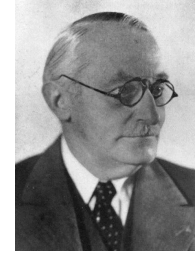
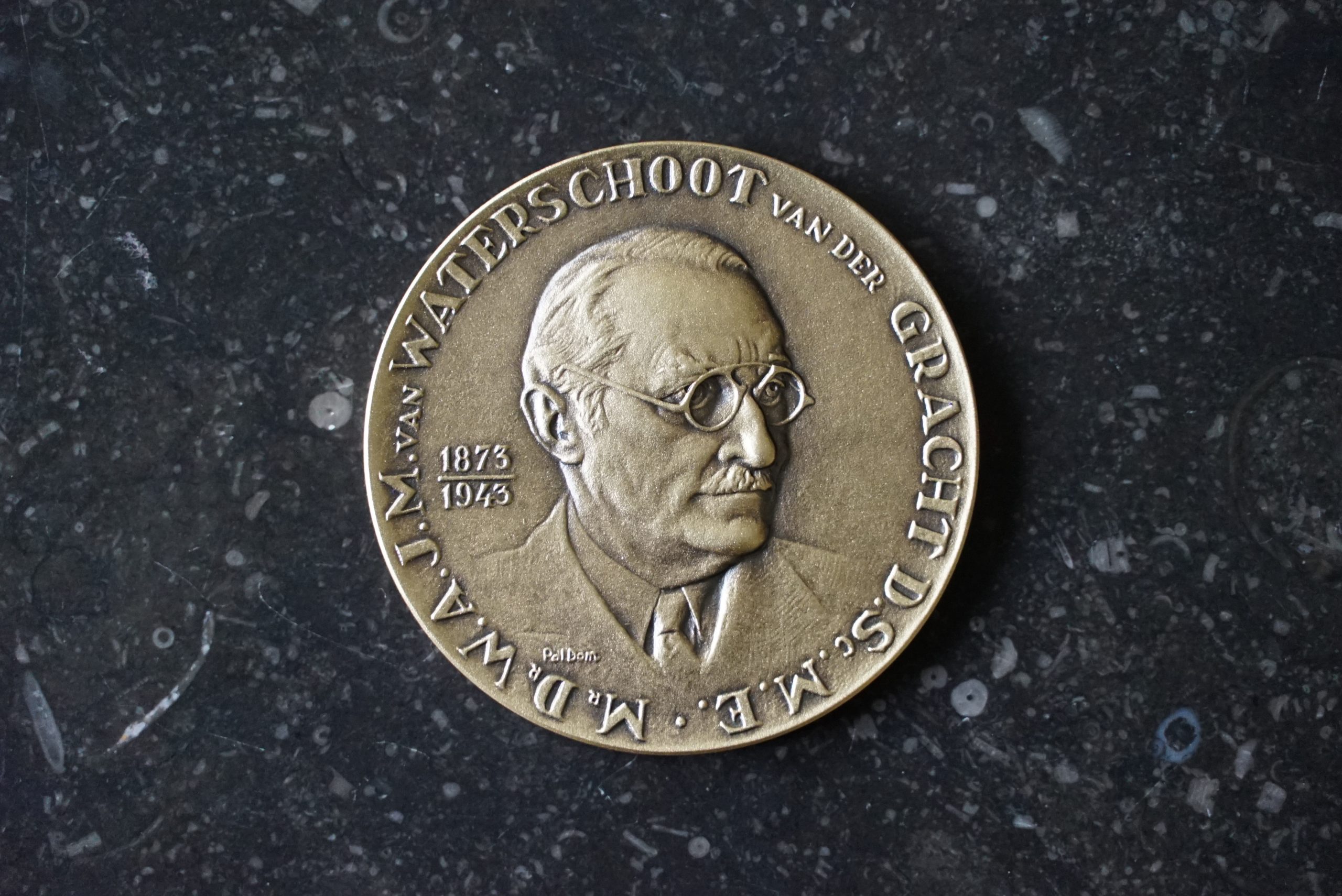
The Van Waterschoot van der Gracht Medal is the highest honour that can be awarded in the Netherlands to exceptionally meritourious earth scientists.
The Medal is named after Mr. Dr. h.c. ir. W.A.J.M. van Waterschoot van der Gracht (1873-1943), founder and first president of the KNGMG and from 1905 to 1915 Director of the National Exploration Service for Mineral Resources (ROD), later the National Geological Survey. Also, this eminent Dutch geologist was one of the founders of the American Association of Petroleum Geologists (AAPG).
Clike here for more biographical details.
According to the Regulations for Honours and Prizes of the KNGMG, the Medal may be awarded by the Main Board to a person (regardless of nationality, age or gender) who has made exceptional meritorious contributions to the (applied) earth sciences in the Netherlands in the scientific, social or educational fields. The person and his/her scientific expertise must have a clear connection with the Netherlands.
Van Waterschoot van der Gracht Medal 2025:
Prof. dr. Henk Brinkhuis
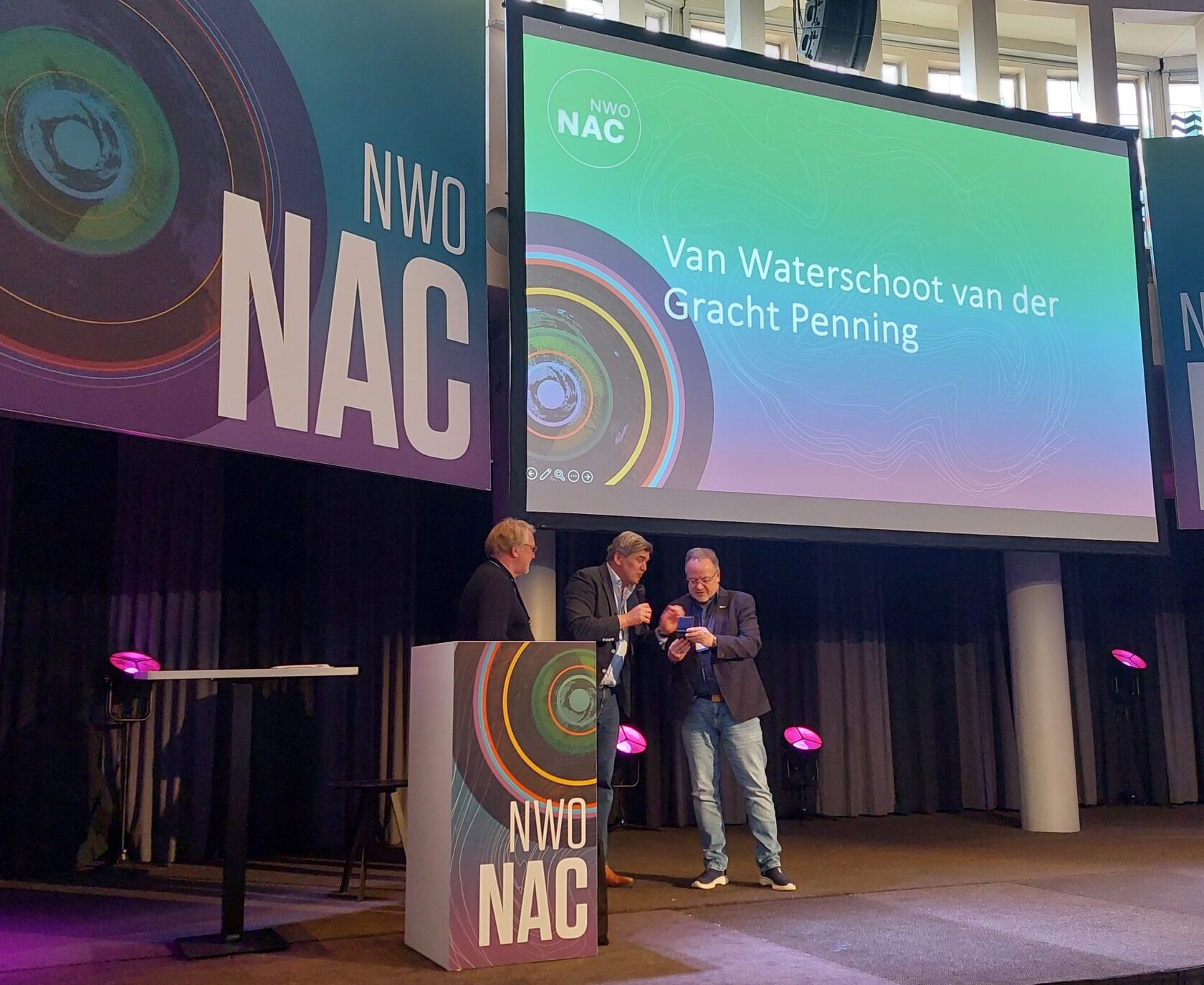
Following positive advice from the Society Council, the KNGMG’s main board unanimously decided to award the Van Waterschoot van der Gracht Medal 2025 to Prof Henk Brinkhuis. The medal was presented on 20 March 2025 by Bob Hoogendoorn (chairman KNGMG) during the NWO NAC in Noordwijkerhout. Han Dolman spoke the laudatio. Below are some parts from the nomination letter.
Henk Brinkhuis has played a fundamental role in the development of palaeoclimatology in the Netherlands through his pioneering work on the analyses of the K/Pg boundary, warm climates of the Eocene and Antarctic glaciation during the earliest Oligocene. As director of NIOZ (2011-2021), Henk Brinkhuis played a leading role in maintaining the institute’s research capacity and renewing its research fleet for the benefit of the Dutch (marine) academic community.
Henk Brinkhuis’ scientific career focused on the field of Biogeology. In 1978, Henk Brinkhuis started studying geology at Utrecht University, with a side trip to Delft University of Technology. In his research, Henk Brinkhuis specialises in stratigraphy, sedimentology, marine palynology and organic biogeochemistry.
Early in his scientific career, Henk Brinkhuis focused on dinoflagellates and their fossilisable organic cysts. Besides the still-used biostratigraphic frameworks, he developed the first-ever palaeoenvironmental and biogeological interpretation of Paleogene species of dinocysts. This interpretation led to proxies for key parameters such as seawater temperature, sea level, primary production, stratification and sea ice. This forms the basis of his more multidisciplinary palaeoceanographic and palaeoclimatological work on mass extinction at the Cretaceous/Paleogene boundary, and the emergence of the Antarctic ice sheet, in the earliest Oligocene. Next, Henk Brinkhuis focuses on climate changes at the beginning of the Eocene.
One of the highlights of Henk Brinkhuis’ scientific career is his participation as principal investigator in the Integrated Ocean Drilling Program Arctic Coring Expedition (IODP ACEX). In this drilling expedition on the Lomonosov Ridge in the Arctic Ocean, more than 400 metres of drill core were retrieved under extremely difficult conditions. Using these cores, Henk Brinkhuis and a multidiscplinary team reconstructed the transition from warm late Paleocene and early Eocene periods to cooler early Eocene periods.
Besides establishing the field of pre-Quaternary dinoflagellate palaeoecology, the discovery of the important role of the freshwater fern Azolla in the carbon cycle is one of Henk Brinkhuis’ scientific achievements. Mainly through Henk Brinkhuis’s work, there is increasing evidence that the massive growth of the small floating freshwater fern Azolla played an important role in extracting carbon from the atmosphere towards the end of the very warm Early Eocene, some 50 million years ago.
In 2007, Henk was appointed to the Chair of Marine Palaeobiology, followed in 2010 by the Chair of Biomarine Sciences at the Science Faculty of Utrecht University. A move to the Chair of Marine Palynology and Palaeoecology at Utrecht University’s Faculty of Geosciences follows in 2011. In 2016 follows the honourable appointment as a member of the Royal Academy of Sciences for his contributions in marine science.
In his career, Henk Brinkhuis has designed numerous courses and lectures. He developed a completely new line of marine education within the bachelor of science programme in Biology. He supervised more than 100 master of science students and 14 PhD students who successfully defended their thesis. He was also co-promoter of 10 PhD students.
In 2011, Henk Brinkhuis was invited to become director of the NIOZ Royal Netherlands Institute for Sea Research. After two years, the institute turns out to be in bad shape (financially) and plans are needed for a restart. In the reorganisation that follows, Henk Brinkhuis initiates an organisational change of four new, interdisciplinary scientific departments.
After the reorganisation, one of Henk Brinkhuis’ spearheads is funding much-needed new research vessels. After an extraordinary effort, he manages to get this done through NWO’s institutes organisation (NWO-I). This not only ensures the future of NIOZ, but also opens the way to a fruitful future of seagoing research in the Netherlands.
Henk Brinkhuis has been, and still is, a tireless advocate for marine science in the Netherlands. One of the highlights of his outreach activities was the VPRO series with the Beagle, where numerous scientists and English writer Redmon O’ Hanlon sailed across the ocean.
In 2021, after stepping down as NIOZ director NIOZ, Henk Brinkhuis will be appointed chairman of the Forum of the International Ocean Discovery Program (IODP).
Van Waterschoot van der Gracht Medal 2023:
dr. René Fraaije
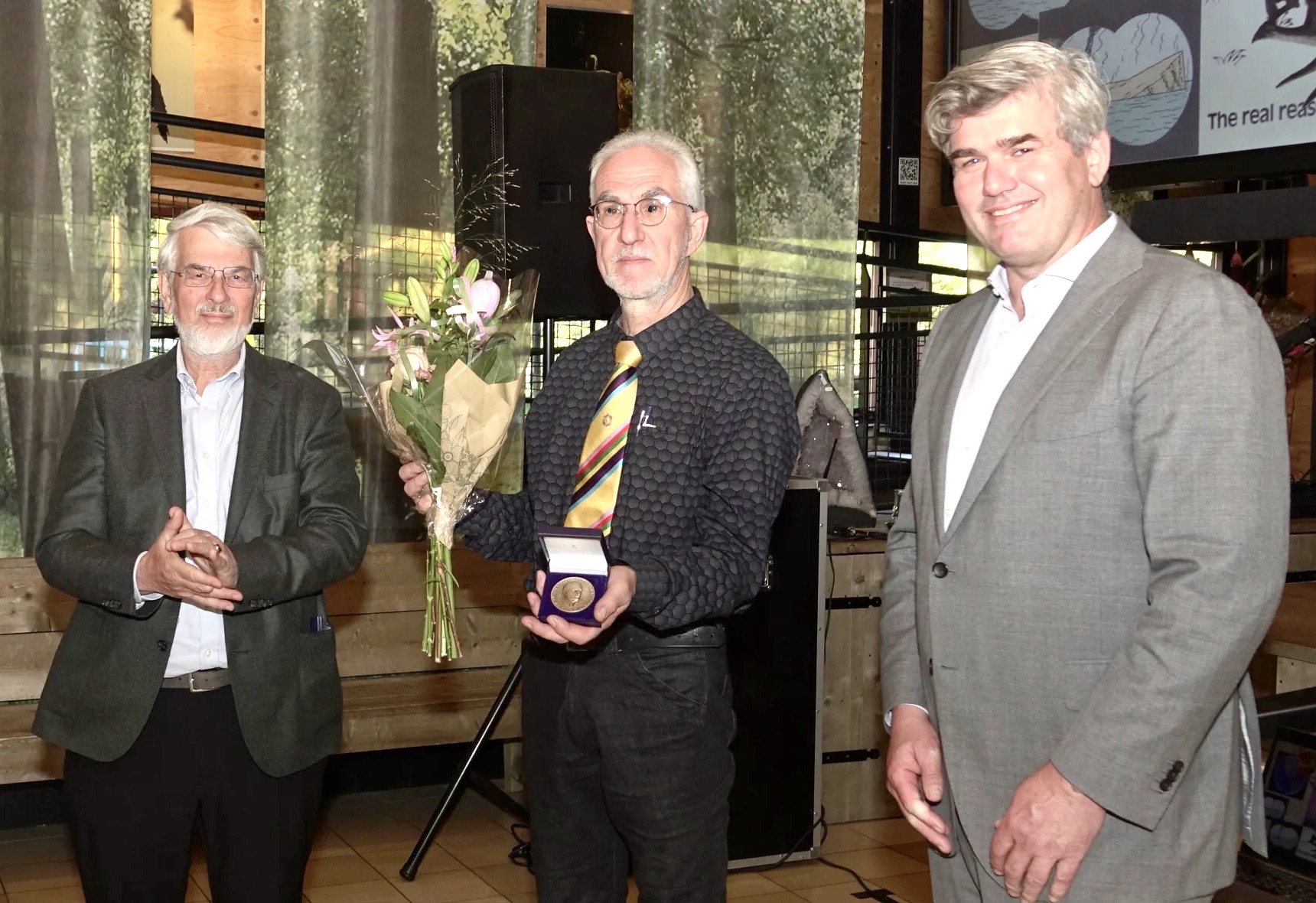
Following positive advice from the Society Council, the main board of the KNGMG unanimously decided to award a second Van Waterschoot van der Gracht Medal 2023 to Dr. René H. B. Fraaije. The medal was awarded by Bob Hoogendoorn (chairman KNGMG) on October 17, 2023, during a well-attended meeting at the Oertijdmuseum in Boxtel. Evert van de Graaff spoke words of praise. Below are some excerpts from the letter of presentation.
“We propose to award the Van Waterschoot van der Gracht Medal to René Fraaije. As founder and director of the OertijdMuseum in Boxtel, René Fraaije has made an exceptional contribution to popularizing earth sciences among a very wide audience.
René Fraaije started collecting fossils as an 11-year-old boy, and in 1978 he went to study geology in Utrecht at age 18. Unlike most geology students, however, he also remained a passionate collector of rocks and fossils! To show his collection to a wide audience, he founded the foundation & museum De Ammonietenhoeve in 1983. The Ammonietenhoeve has grown into the popular Oertijdmuseum which was opened in April 1999 by the then State Secretary Dr. Rick van der Ploeg. In 2007, the large dinosaur hall was built and then the primeval age garden was expanded to include the primeval forest or arboretum. In the dinosaur hall, you can admire skeletons of Tyrannosaurus rex and a Brachiosaurus, among others. In the arboretum, visitors walk past “living fossil flora,” while in the laboratories the preparation of dinosaur skeletons can be viewed. All in all, the Oertijdmuseum offers a unique combination of visitor activities for anyone interested in Earth’s history. In addition to being an attractive public museum, the Oertijdmuseum is also heavily involved in organizing important scientific meetings such as the Jurassic Giants Symposium (November 2022).
In 2019, the Oertijdmuseum attracted over 85 000 visitors, and despite COVID-19 in 2020 and 2021 still over 45 000 visitors. The driving force behind all this is René Fraaije. Within the professional group of Dutch geoscientists, this puts René Fraaije at a lonely height in terms of his effective contribution to public communication about geology. This by establishing a geological museum that is attractive to a very wide audience. The Oertijdmuseum can therefore, in our judgment, compete well with the much larger Naturalis in terms of attractiveness. Even in the years 2020 & 2021, which were dominated by corona measures, the Oertijdmuseum was able to generate its own income from, among other things, visitor contributions: ~70 % of the total income of +/- € 800 000/year came from its own revenue! Truly an impressive achievement for a private museum!
Our conclusion: based on his exceptional contribution to effectively communicating earth sciences to a very wide audience, as well as making a very respectable scientific contribution, René Fraaije stands at a lonely height within the professional group of geologists and miners. In our opinion: definitely worthy of the Van Waterschoot van der Gracht Medal! ”
Van Waterschoot van der Gracht-penning 2023:
prof. dr. Kees Kasse
Text will follow soon!
Van Waterschoot van der Gracht Medal 2022:
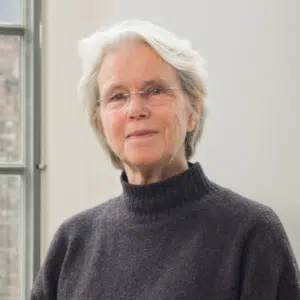
drs. Lucia van Geuns
Following positive advice from the Society Council, the main board of the KNGMG has unanimously decided to award the Van Waterschoot van der Gracht Medal 2022 to Drs. Lucia van Geuns. The medal was presented by Bob Hoogendoorn (president KNGMG) during the ‘Earth Sciences & Communication symposium’ on October 13 in Delft. Evert van de Graaff spoke in praise. Below are some excerpts from the nomination letter.
“We propose to award Lucia van Geuns the medal for her exceptional contribution to the public and scientific debate on energy issues and the energy transition. She stands out from most scientists by taking a very active part in the public debate on energy issues. She does this through appearances on radio and TV and by frequently giving public lectures on that subject. She is able to explain complex issues intelligibly to a lay audience. This is why she is often asked to comment on TV on issues such as energy security, oil and gas price development, and the practical feasibility of energy transition goals. Among Dutch earth scientists, she is unique in this! There is no other Dutch geologist or mining scientist who contributes so substantively and effectively to the public debate on energy issues and the energy transition, and thus profiles herself publicly in a similar way.
In addition to this public role, Lucia van Geuns also made herself very creditable to our profession as president of the KNGMG (2013-2019). During her presidency, the KNGMG raised its profile and also renewed itself (e.g. organization of ‘Symposium on seismicity induced by gas production from the Groningen Field’ & new design and editorial style of the Geo.brief). Within the profession, Lucia van Geuns also further profiles herself with her commitment to effective communication. The best example: the production of the film ‘Mijnbouwstraat 120 1912-1921 A striking building‘. For that film she wrote the scenario as co-author, but also arranged the casting and directed.
Our conclusion: based on her exceptional contributions to the social and scientific debate on energy issues and the energy transition, Lucia van Geuns stands alone within the professional group of geologists and miners. Truly worthy of the Van Waterschoot van der Gracht Medal!”
Van Waterschoot van der Gracht Medal 2022:
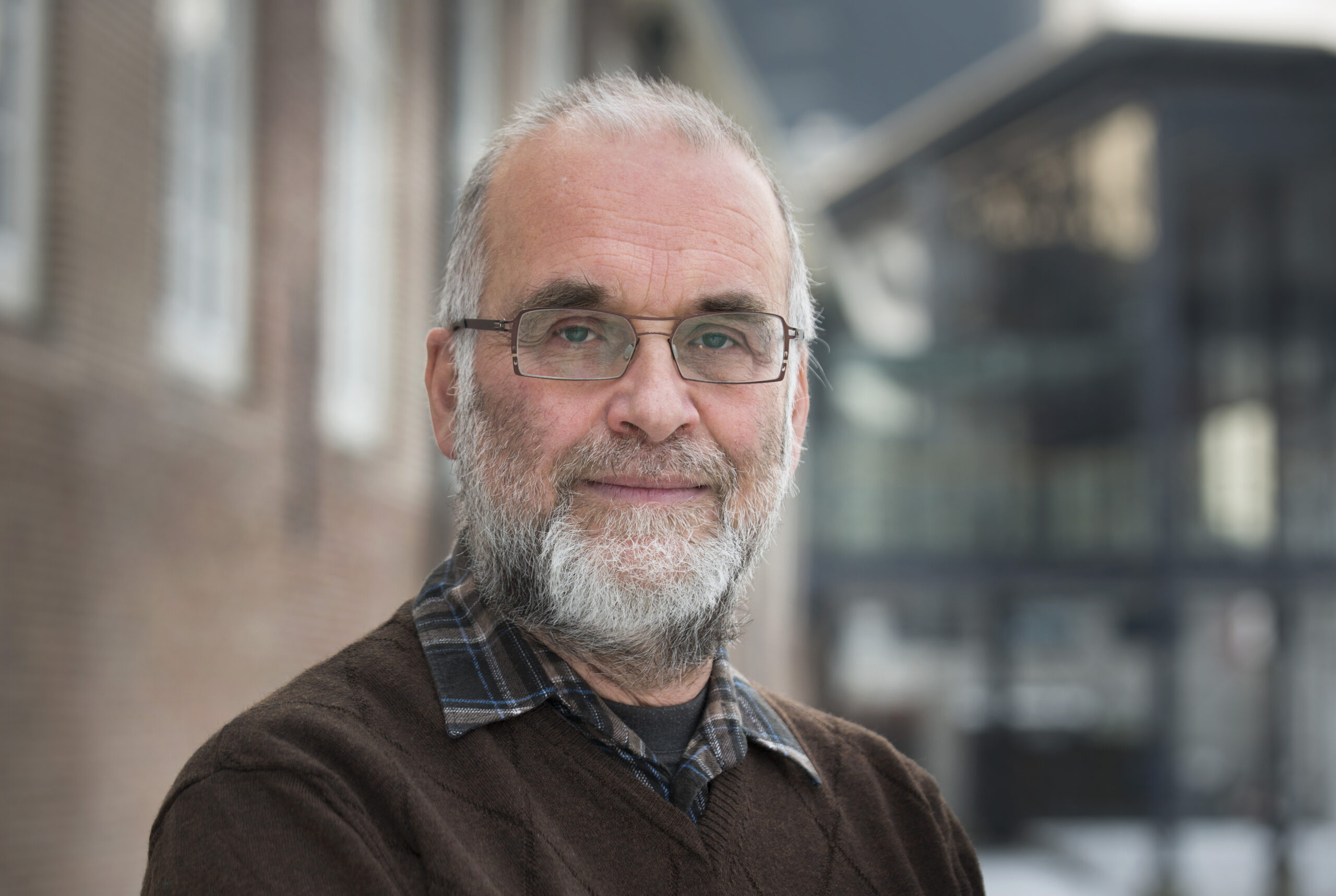
prof. dr. Jan Wijbrans
Following positive advice from the Society Council, the Main Board of the KNGMG has unanimously decided to award the Van Waterschoot van der Gracht Medal 2022 to Prof. Dr. Jan Wijbrans. Jan is a world-leading pioneer in the development of (Argon) geochronology and has mentored many postdocs, AIOs and students and inspired generations of young scientists over the past 30 years.
After a PhD in Australia and postdocs in Canada, Jan started as a researcher at the NWO Laboratory for Isotope Geochronology on the VU campus in Amsterdam. Here he received an NWO grant to modernize the existing K/Ar facility. Years of research, in collaboration with colleagues at Utrecht University, resulted in 2008 in an important publication in the renowed journal Science.
In the late 1990s and early 00s, Jan was one of the first in the Netherlands to invest in collaborations with Chinese scientists. These collaborations resulted in a method to date liquid inclusions by grinding them finely instead of heating them. Today, this method is used and further developed in several laboratories worldwide, including inFluidNET, a Marie Skłodowska-Curie innovative training network started by Jan.
Around 2000, a successful collaboration was established with INGV Catania for dating relatively young volcanic activity. This led to many cited publications and a beautiful geological map of Etna. Jan also worked on the Holocene stratigraphy of the Stromboli and Pliocene volcanism of the Balaton Highlands.
Very mentionable is that under Jan’s leadership the Amsterdam Geochronoloy Laboratory has become one of the world’s leading laboratories in geochronology. In addition to the dating method described above, Jan has developed an Argon dating facility. Around 2010, two unique mass spectrometers optimized for Argon geochronology were developed in this laboratory.
Also, Jan has always been passionate about education. He taught several BSc and MSc courses and used his network to bring well-known scientists to the Netherlands for challenging education for his students. For example, Jan organized the 2008 Eendracht Expedition to Western Australia.
Since 2011, Jan has been a professor of Geology at Leiden University. One of the highlights of this is the summer school Crises in Biology. He has also developed courses on chemical biogeology for the Biology MSc program and for the Leiden University College in The Hague. All in all, Jan brings together different subjects in various ways, such as geology, biology, astronomy and history.
Van Waterschoot van der Gracht Medal 2021:
dr. Carina Hoorn
Following positive advice from the Society Council, the main board of the KNGMG has unanimously decided to award the Van Waterschoot van der Gracht Medal 2021 to Dr. Carina Hoorn. The medal was presented by Bob Hoogendoorn (president KNGMG) during the symposium ‘Applications of palynology in Earth Sciences‘ on Sept. 30 in Amsterdam. Her colleague Henry Hooghiemstra spoke laudatory words, which are reproduced below.
Carina has been working on the natural history of the Amazon and its gradual seaward expansion, the Amazon Fan, since the 1990s. She studied Neogene sediments in the western Amazon. Her main contributions have been the identification of the crucial role of Andean uplift in drainage reconfigurations in northern South America, and the extent of marine intrusion into the Amazon during the Neogene,” said Hooghiemstra, professor at the Institute for Biodiversity and Ecosystem Dynamics.
Carina’s ideas on the relationship between mountain building, climate and biodiversity levels also developed quickly. Hooghiemstra: “Initially, Biodiversity from mountain building appeared in Nature Geoscience in 2013. This was followed in 2018 by another paper in Nature Geoscience entitled Geological and climatic influences on mountain biodiversity with Alexandre Antonelli and colleagues. Carina showed that geological inputs are fundamental for evidence-based scenarios of how past environments and biodiversity had evolved over long time scales.’ Her work has been widely followed and inspired new research projects in and outside South America. And finally, Carina is coordinator of the Geology and geodiversity of the Amazon Working Group of the Science Panel for the Amazon.
Van Waterschoot van der Gracht Medal 2020:
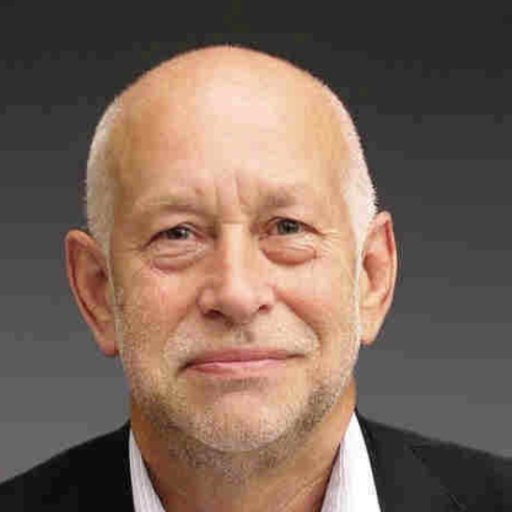
dr. Cees Laban
Following positive advice from the Society Council, the KNGMG Executive Board has unanimously decided to award the 2020 Van Waterschoot van der Gracht Medal to Dr. Cees Laban.
Cees has been particularly creditable in applied marine geology in the scientific, social and educational fields for both the European and Caribbean Netherlands. Only, for the more than fifty years of research on the Cenozoic North Sea floor alone, Cees of course deserves praise. A quick calculation shows that this amounts to one week per thousand years. By comparison, Cees spent by far the most time on the Pleistocene glacials Elsterian, Saalian and Weichselian. His dissertation “The Pleistocene glaciations in the Dutch sector of the North Sea” provides a nice overview of this. Twenty geological maps show his collaboration with the British and Belgian geological services. But above all, Cees is very broadly educated. From glacial micromorphology to heavy minerals, from environmental impact to settlement sensitivity, Cees has published, reported and told about it.
Officially, Cees has been retired for about ten years now, which in his case is more like active retirement. He is, like one of his maps, INDEFATIGABLE. Still busy on all fronts, tireless in his pursuit of applicable sedimentary seafloor knowledge, and always ready to jump in when asked for help or information.
The nomination took place on June 17, 2020 on a sea-view terrace in IJmuiden. The official presentation during the Future of Sand symposium on November 26, 2020.
Van Waterschoot van der Gracht Medal 2017:
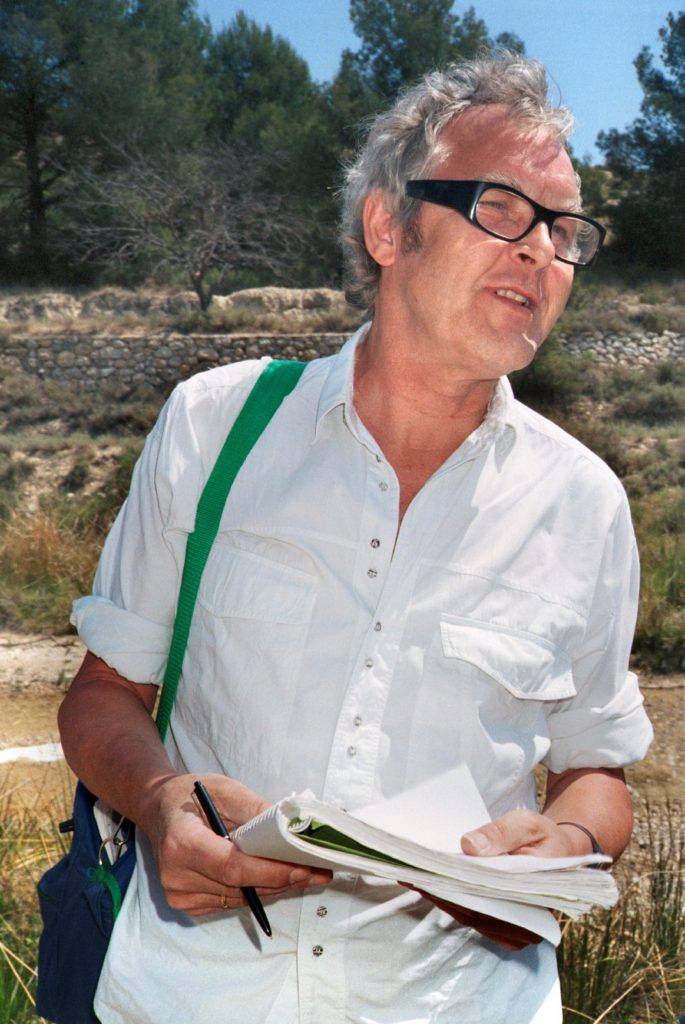
prof. dr. Jan E. van Hinte
Following positive advice from the Society Council, the Main Board of the KNGMG has unanimously decided to award the 2017 Van Waterschoot van der Gracht Medal to Prof. Dr. Jan E. van Hinte.
Jan van Hinte is Emeritus Professor of Paleontology and Stratigraphy at the Free University (VU Amsterdam). His work is of great significance for the development of Marine Geology in the Netherlands. For the board, the main arguments for awarding the Medal are the great value Jan van Hinte has had for both science and industry in the Netherlands, his important contributions to the Ocean Drilling Program, and the large number of PhD theses that have been produced under his leadership.
The significance of Jan van Hinte to the earth sciences is powerfully expressed in the final conclusion of the talk by Prof. Jan Smit and thirteen other earth scientists: “Jan van Hinte was a leading pioneer in one of the most spectacular developments in science: the establishment of Earth System Science. As a researcher, he was at the world’s forefront. He led more than 30 PhDs and inspired a large number of young people. Nothing about this man is small. His boldness and vision are great, his modesty is exemplary, and when it comes to good causes, his generosity knows no bounds. If anyone deserves the van Waterschoot van der Gracht medal, it is him.”
The award ceremony took place on November 10, 2017 at NIOZ (on Texel) during the IODP-Netherlands day.
Van Waterschoot van der Gracht- Medal 2016:
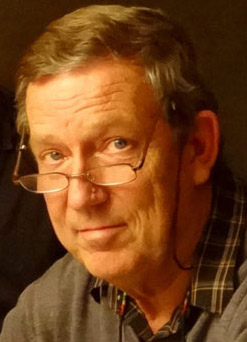
Prof. dr. Jan Smit
The Main Board of the KNGMG has, following positive advice from the Society Council, unanimously decided to award the 2016 Van Waterschoot van der Gracht medal to Prof. Dr. Jan Smit for his extraordinary contributions to the Earth Sciences.
Jan Smit is one of the founders of the field of Event Stratigraphy with his pioneering research on the extinction of much of life on the Cretaceous-Paleogene (C-P) boundary. He is an internationally renowned researcher with an impressive list of publications, gifted teacher, writer for a wide audience, and has also dedicated himself to the KNGMG and the Paleobiological Circle.
Jan studied at the University of Amsterdam and later received his doctorate there cum laude for his research on the (then) Cretaceous-Tertiary boundary. He then spent several years at the University of California, Los Angeles, before returning to Amsterdam. In 2003, he was appointed professor of Event Stratigraphy at the Vrije Universiteit. Even after his retirement in 2013, he remains very active in science.
His keen observations in the field and inviting enthusiasm make him a beloved lecturer. With his clear explanations, he has made his work accessible so that his explanation of the C-P boundary due to a meteorite impact is now widely accepted.
Jan has also long rendered meritorious service within the boards of the KNGMG and the Paleobiological Circle. His work has been rewarded several times with national and international awards, and the widely supported nomination for the Van Waterschoot van der Gracht medal once again shows our great appreciation for his work.
Van Waterschoot van der Gracht Medal 2015:
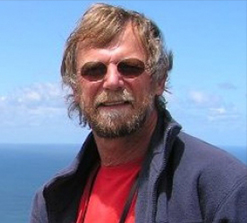
Dr. George Postma
The main board of the KNGMG has awarded the 2015 Van Waterschoot van der Gracht medal to Dr. George Postma. The award is based on his role as a forerunner for three decades in international sedimentological research, and on his merits for university education in the Netherlands.
George attended graduate school at the University of Amsterdam during the heyday of descriptive sedimentology and stratigraphy. He was gripped during his (doctoral) studies by the question that could not be solved by descriptive fieldwork: how are these rocks deposited? This drove him to develop a line of research that to this day has put him at the forefront of the international research community: comparative research between experimental sedimentology and geological observations in the field.
His work at Utrecht University has led to a robust methodological approach using short experiments to provide insight into geological evolution of sedimentary systems, under the influence of changes in sea level, climate and tectonics. Eventually, the experimental facilities George initiated in the 1980s grew, under his leadership, into the Eurotank Stream Channels Laboratory, now recognized worldwide as a center of expertise and excellence in experimental sedimentological research.
In his analyses, George truly sees the origins of the deposits before him and has a special gift for being able to bring everyone, regardless of earth science preference or background, into it. In teaching, too, George has been an inspiration to generations of geology students. As with his teachers Roep and Beets, this consists mainly of working together on the basis of equality. Admitting ruefully that something is difficult “…but if we just draw a picture first we’ll figure it out.”
The presentation of the medal to Dr. George Postma took place on February 25, 2016 at a mini-symposium at the University of Utrecht.
Van Waterschoot van der Gracht Medal 2014:
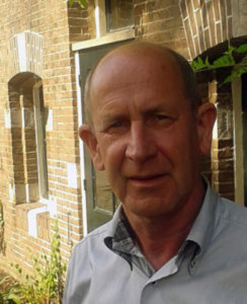
prof. dr. C.G. (Cor) Langereis
Cor Langereis shaped magnetostratigraphy in the 1980s both in the Netherlands and internationally. This now prominent area of research in earth sciences has been developed by the geophysicist Langereis and is now one of the first extensive and intensive collaborations between geophysics and geology in the Netherlands, completely in the spirit of the founders (in the 1950s) of paleomagnetic research in the Netherlands, Prof. Dr. M.G. Rutten and Prof. Dr. J. Veldkamp. Since the mid-1990s, Cor Langereis has headed the Fort Hoofddijk Paleomagnetic Laboratory at Utrecht University, and he continues to do so in exemplary fashion to this day. Internationally, Cor Langereis is considered an authority on paleomagnetism. The award ceremony of the Van Waterschoot van der Gracht medal to Prof. Dr. Langereis took place on February 5, 2015 in the Booth Room in the University Library at Uithof, Utrecht.
See also University of Utrecht Faculty of Geosciences news 09.10.2014
Van Waterschoot van der Gracht Medal 2014:
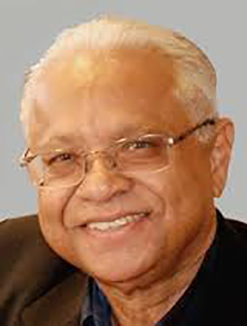
dr. S.E. (Eddie) Jharap
The in Suriname-born geologist Eddie Jharap has done exceptional work in developing a national oil industry for Suriname. With great perseverance, he built a highly successful oil company out of nothing for the Surinamese state. Jharap spent 25 years leading an industry that developed from a one-man government agency to the oil company “Staatsolie,” which when he retired in 2005 accounted for about 8% of Suriname’s GDP. Eddie Jharap has already been rewarded for his merit by the Surinamese government with the country’s highest award. The University of Suriname awarded him an honorary doctorate. After his retirement, Jharaph is still socially active; he gives lectures at Surinamese schools and devotes himself to disadvantaged population groups to give people the opportunity to realize their dreams.
The presentation of the Van Waterschoot van der Gracht medal to Dr. Eddy Jharap took place on Friday, January 16, 2015 in The Hague in conjunction with a symposium Economic Geology of Suriname, Oil and Minerals. See also the Youtube video.
Dragers Van Waterschoot van der Gracht Penning
1951 — prof. dr. ir. F.K.T. van Iterson
1951 — prof. dr. ir. F.A. Vening Meinesz
1951 — prof. dr. W.J. Jongmans
1953 — prof. dr. ir. C.H. Edelman
1954 — prof. dr. Ph.H. Kuenen
1955 — ir. J. Bakker Gzn
1956 — prof. dr. G.J.A. Grond
1957 — prof. dr. ir. H.A. Brouwer
1960 — ir. G.J. de Vooys
1962 — dr. ing. E.L. Erwin Anderheggen
1962 — prof. F.B. Hinsley DSc
1962 — dr. E. Kundig
1962 — prof. dr. P. Pruvost
1964 — prof. dr. ir. W.P. van Leckwijck
1965 — prof. mr. dr. F. Florschütz
1966 — ir. A. Hellemans
1967 — prof. dr. I.M. van der Vlerk
1968 — ir. B.P. Boots
1969 — ir. C.E.P.M. Raedts
1969 — prof. dr. L.U. de Sitter
1970 — prof. dr. ir. R.W. van Bemmelen
1972 — dr. H.M.E. Schurmann
1972 — prof dr. L.M.J.U. van Straaten
1974 — prof. dr. Th. van der Hammen
1974 — prof. dr. W.H. Zagwijn
1975 — prof. ir. Th R. Seldenrath
1977 — prof. dr. ir. F.J. Faber
1978 — prof. dr. W.P. de Roever
1981 — prof. dr. G.C. Maarleveld
1984 — prof. dr. Tj. van Andel
1985 — prof. dr. H.J. Zwart
1987 — dr. M. Teichmüller
1987 — dr. ir. J. Stuffken
1987 — prof. dr. E. den Tex
1987 — dr. P.A. Ziegler
1990 — prof. dr. H.J. Behr
1990 — dr. A.R. Ritsema
1992 — dr. R.J. Murris
1992 — dr. G.J.J. Aleva
1993 — prof. dr. D.G. Price
1994 — prof. dr. J.A. Katili
1996 — prof. dr. A.J. Pannekoek
1996 — prof. dr. J.L.R. Touret
1997 — dr. S. Jelgersma
1998 — prof. dr. A. Brouwer
1999 — dr. J.-J. Dozy
1999 — dr. K. Glennie
2000 — dr. F. Kockel
2002 — prof. dr. P. Westbroek
2002 — dr. D.J. Beets
2003 — prof. ir. K.J. Weber
2005 — dr. H.J.A. Berendsen
2006 — prof. dr. G.J. Boekschoten
2007 — prof. dr. N.J. Vlaar
2007 — prof. dr. S.A.P.L. Cloetingh
2009 — prof. dr. W. Schlager
2010 — prof. dr. S.B. Kroonenberg
2011 — prof. dr. M.J.R. Wortel
2013 — prof. dr. H. Hooghiemstra
2014 — prof. dr. C.G. Langereis
2014 — dr. S.E. Jharap
2015 — dr. G. Postma
2016 — prof. dr. J. Smit
2017 — prof. dr. J.E. van Hinte
2020 — dr. C. Laban
2021 — dr. M.C. Hoorn
2022 — prof. dr. J. Wijbrans
2022 — drs. L. van Geuns
2023 — dr. C. Kasse